
QuickBooks Partnership Guide: How to get listed in the QuickBooks marketplace
Intuit splits every call into two categories and charges for one of them. Creating invoices and customers is free and uncapped, reading accounts and reports is metered, and which tier you are on decides both your monthly fee and what each further read costs.

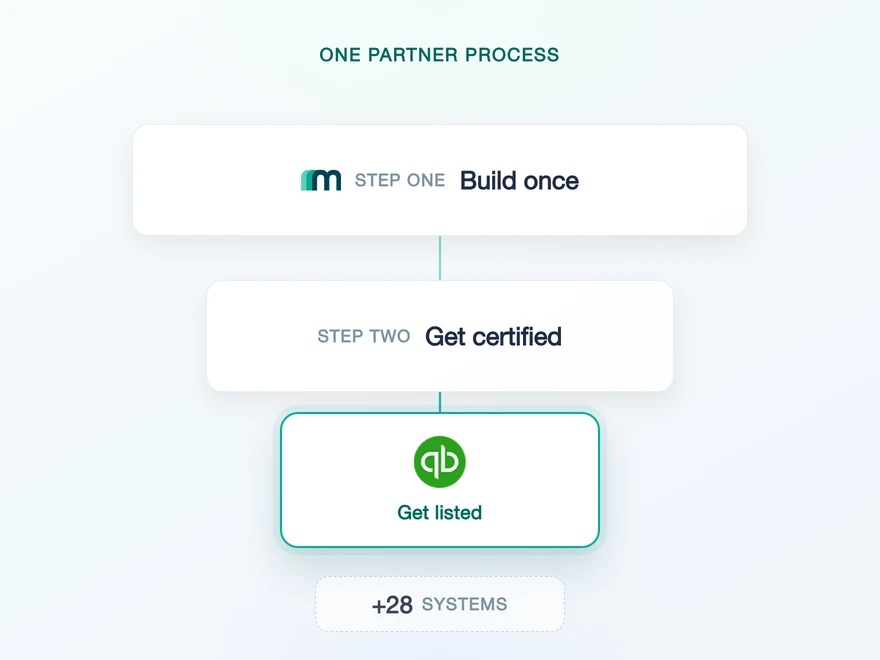
What the App Partner Program asks of you
Offering an integration with QuickBooks means joining Intuit’s App Partner Program. Every organisation starts on the Builder tier automatically, and the entry requirement is the same at every level: an Intuit-approved app assessment questionnaire, acceptance of the current developer terms and ongoing compliance with the programme.
Intuit groups the benefits into build, engage and grow: tooling and analytics for the development itself, account management and technical consultation, then badging, marketplace reach and go-to-market support.
One constraint belongs at the top rather than in a footnote. The programme is available to partners based in the United States, the United Kingdom, Australia and Canada with the exception of Quebec, and the published rate card is region-specific.
Requirements and regional scope from Intuit’s App Partner Program Guide and the partner benefits page, checked 10 August 2026. The technical side of the same system is a separate guide, linked below once it is published.
Two categories, and only one of them is metered
This is the change that matters, and it is not a price rise. Intuit splits every call into Core and CorePlus, and the split follows the endpoint together with the HTTP method rather than the volume.
Core covers data-in work: creating and updating invoices, bills, customers, vendors. Intuit’s words are that these calls are “unmetered and uncharged”. CorePlus covers data-out work: reading accounts, querying company information, fetching reports. Those are metered.
So writing into a customer’s books is free and reading back out of them is the billable half. Xero arrived at the same place from a different direction, metering egress gigabytes rather than calls, which makes this a pattern across the market rather than one vendor’s pricing quirk.
Uncapped on every tier, Builder included. Creating and updating records is never metered.
- Builder
- 500.000 included, then blocked
- Silver
- 1 million included
- Gold
- 10 million included
- Platinum
- 75 million included
Only successful calls count. A 2xx is metered, an error is not, and sandbox endpoints are excluded entirely.
A retry after a failure is free. It is the one place in this model where something going wrong does not cost anything.
Category definitions and the 2xx rule from Intuit’s API classification article, which also lists every endpoint by category. Credit volumes from the benefits page. Both checked 10 August 2026.
What happens when the included credits run out
Each tier includes a monthly allowance of metered calls, and what happens at the ceiling depends on which tier you are on. That difference is the single most important sentence in the programme for anyone still on the free tier.
Intuit, on the free tier: “Any CorePlus calls made above the included monthly credit will be blocked.” The cap is 500.000 metered calls per calendar month. Your writes keep working and your reads stop, which surfaces as an integration that has quietly gone stale rather than as a bill.
On Silver, Gold and Platinum the same overage keeps working and is charged against the rate card instead. Moving off Builder is therefore a reliability decision before it is a cost one.
Quotation and the cap from platform service fees, checked 10 August 2026. Credits reset monthly on Builder and with the billing cycle on the paid tiers, and calls are counted across every production app in one workspace.
Four tiers, four rate cards
The monthly fee buys benefits and an allowance. What it also buys, and what is easy to miss, is a better price on everything past that allowance.
| Tier | Monthly fee | Included reads | Connections |
|---|---|---|---|
| Builder | Free | 500.000, then blocked | No minimum |
| Silver | 300 USD | 1 million | No minimum |
| Gold | 1.700 USD | 10 million | 500 minimum |
| Platinum | 4.500 USD | 75 million | 3.000 minimum |
Fees and credits from Intuit’s partner benefits page, the connection minimums from the program guide. Both checked 10 August 2026. Rates shown are the published United States figures.
The rate card underneath is banded by volume, and the bands move with the tier. Between one and ten million metered calls, Silver pays 3,50 USD per thousand while Gold and Platinum pay nothing because they are still inside their allowance. Past 75 million, Silver pays 0,35, Gold 0,28 and Platinum 0,25.
Intuit also notes that calls crossing a band are charged at the next band’s rate, so the effective price falls as volume grows rather than jumping.
- Builderfreeno listing
500.000 reads, then blocked. No listing
- Silver300 USD / monthlisting optional
1 million reads included
- Gold1.700 USD / monthlisting optional
10 million reads, 500 active connections required
- Platinum4.500 USD / monthlisting optional
75 million reads, 3.000 active connections required
Active connections are counted across every production app in one workspace, so several apps add up here. Xero does the opposite and counts each app on its own.
A marketplace listing is optional at every paid tier
If the listing is what brought you here, the good news is that no paid tier forces it and no paid tier withholds it. Intuit’s program guide puts it in a heading: “Marketplace listing is optional for Silver, Gold and Platinum Tier partners.” On Builder it is not applicable.
What the upper tiers do require is scale, measured in active connections. An active connection is one QuickBooks Online or Intuit Enterprise Suite company with a live subscription and a valid, unexpired token attached to your app. Gold asks for 500 of them and Platinum for 3.000.
Because those connections are counted across every production app in the same workspace, a vendor with two products reaches the threshold sooner rather than later. That is the opposite of how Xero counts, and it is the kind of detail that quietly decides whether you run one app or several.
An earlier version of this page marked the marketplace listing as required for Gold and Platinum. Intuit marks it optional at all three paid tiers. Corrected here, because a requirement that does not exist changes which tier a team budgets for.
Listing status, the connection minimums and the definition of an active connection from Intuit’s App Partner Program Guide, checked 10 August 2026.
What Maesn covers, and what Intuit bills you for directly
Nothing in the programme changes how you build against Maesn. The data model holds, the interface holds, and QuickBooks stays one system among the rest. What the programme changes sits on the other side of the line.
- The app is yours, so the tier is yours. You register it under your own product name and the assessment, the tier and the monthly fee belong to that app. We walk the process with you and we cannot hold it for you.
- Intuit bills you directly. The flat programme fee and any metered overage are charged by Intuit against a payment method you register with them, independently of what you pay Maesn.
- Reducing metered reads is shared work. Which objects you read and how often is your product decision. Making it once instead of once per platform is ours. Xero meters gigabytes where Intuit meters calls, and the cross-vendor view is the accounting integration partnerships guide.
- The categories are Intuit’s, not ours. Whether a given call counts as
CoreorCorePlusis decided by Intuit’s classification list, and it is worth reading it against your own sync plan rather than guessing from the verb.
What the connection itself involves is on the QuickBooks API page.
Frequently asked questions
What is the difference between Core and CorePlus calls?
What does the QuickBooks App Partner Program cost?
What happens when I exceed my CorePlus credits?
Do I have to list in the QuickBooks marketplace?
Are failed API calls and sandbox calls charged?
Is the QuickBooks partner program available everywhere?
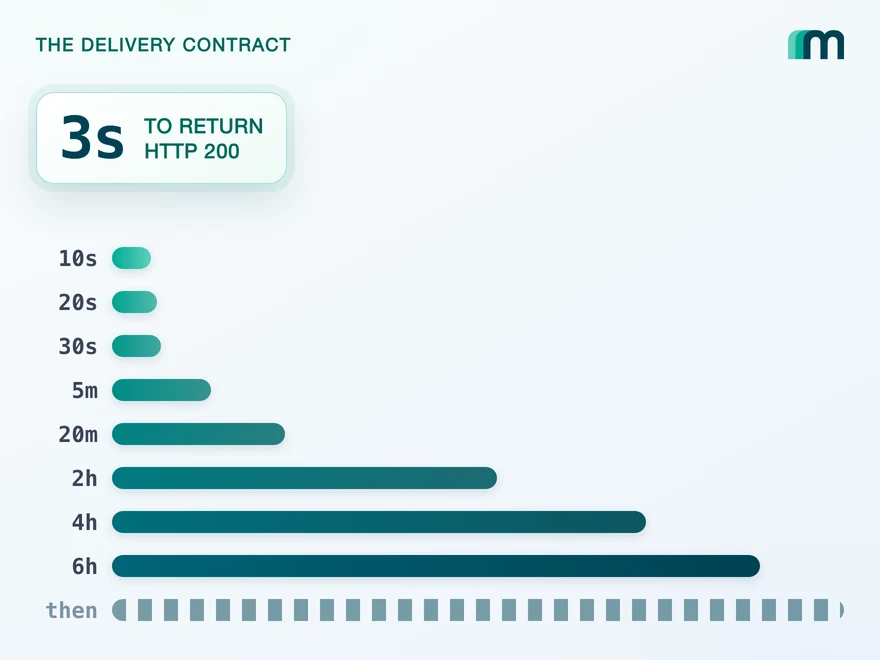
QuickBooks Online Webhooks: Events, Retries and Recovery
QuickBooks Online webhooks cover 29 entity types and expect HTTP 200 in three seconds. Why Intuit still asks you to poll change data capture.
 Lennart Svensson · 25 Aug 2026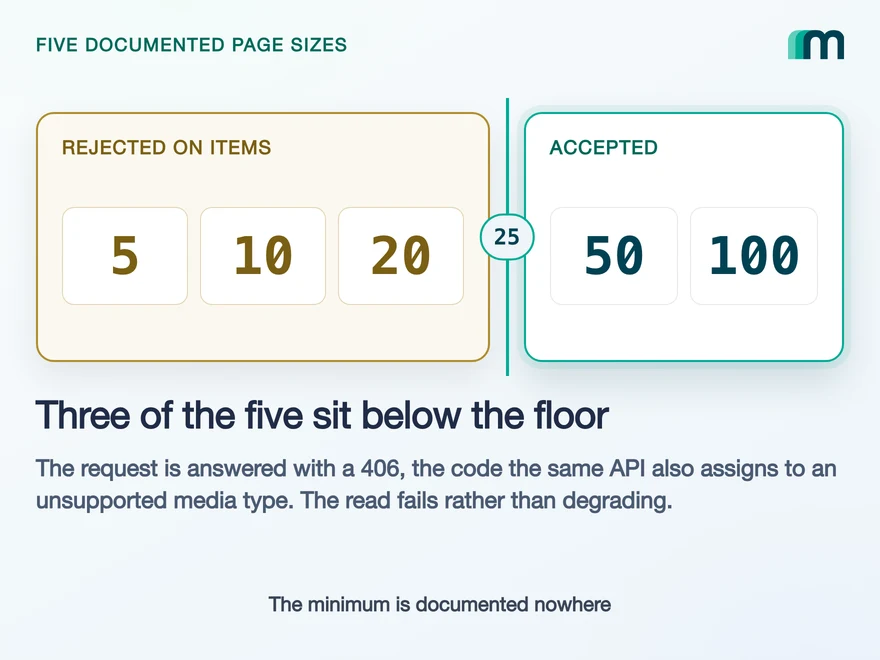
Lexware Office Pagination: The 406 and One Page Size
Lexware Office validates the page size and rejects a bad one with 406, the same code it uses for an unsupported media type. What that means for your read loop.
Lennart Svensson · 20 Aug 2026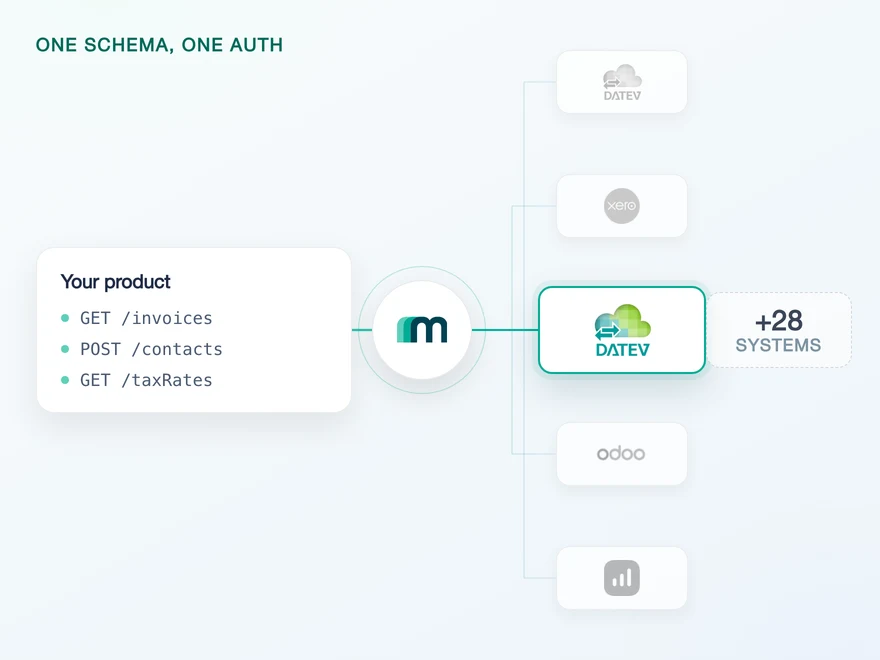
How to Integrate with DATEV Rechnungswesen: One Connection
One connection carries reading and writing in DATEV Rechnungswesen, on a two-year token. Which objects travel in which direction is the real decision.
Lennart Svensson · 17 Aug 2026Build once on the Unified API.
Every accounting platform is rewriting its partner programme at the same time. Build against one interface and the next programme change is a line in a table rather than a project.