
Xero Partnership Guide: How to get listed in the Xero App Store
Xero replaced revenue share with five paid tiers on 2 March 2026. What you pay for is the number of organisations you connect and the volume of data you read back out, and the App Store listing you probably came for does not start until the third tier.

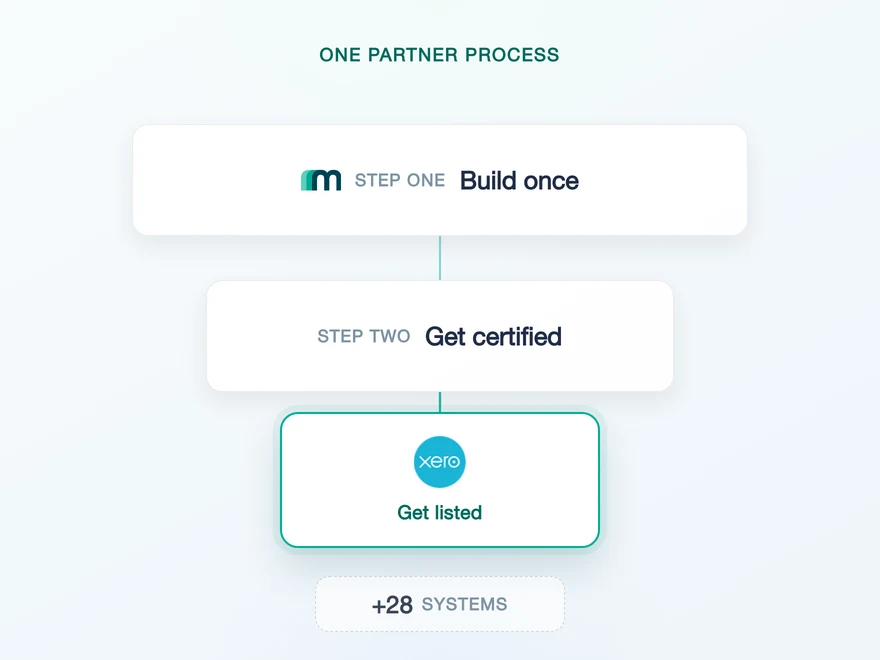
What changed for Xero partners on 2 March 2026
Anyone offering an integration with Xero becomes a Xero app partner, and until this year that mostly meant a listing and a share of what you sold through it. Xero has replaced the arrangement. In their words, they are “retiring our current revenue share model (comprising Xero App Store Subscriptions and Commercial Billing)” and introducing five tiers instead.
So the commercial question moved. It used to be what percentage Xero takes of your revenue. It is now a flat monthly fee plus a usage bill, and both are driven by numbers you control at design time rather than at sales time.
The migration ran on a published schedule. No new apps entered the old models after 4 December 2025, apps created between then and 2 March 2026 started on an interim arrangement, and existing apps moved from 2 March 2026 with 30 days notice each.
All four dates and the quotation from Xero’s developer pricing page, checked 10 August 2026. The technical side of the same system, the limits and the event coverage, is the how-to guide below.
Five tiers, and connections are only half of what you pay for
The ladder is Starter, Core, Plus, Advanced and Enterprise. Every tier carries a connection ceiling and a monthly fee, and a connection is one customer organisation attached to your app through a valid OAuth grant.
| Tier | Connections | Monthly fee | Read allowance |
|---|---|---|---|
| Starter | 5 | No charge | n/a |
| Core | 50 | $35 | 10 GB |
| Plus | 1.000 | $245 | 50 GB |
| Advanced | 10.000 | $1.445 | 250 GB |
| Enterprise | No limit | On application | On application |
From Xero’s tier fees and connection limits, checked 10 August 2026. Prices are tax exclusive and shown in the currency Xero publishes them in. Beyond the allowance, egress costs 2,40 AUD per gigabyte on Core, Plus and Advanced alike.
- Starterno chargeno listing
5 connections, no read allowance
- Core$35 / monthno listing
50 connections, 10 GB read
- Plus$245 / monthlisting optional
1.000 connections, 50 GB read
- Advanced$1.445 / monthlisting optional
10.000 connections, 250 GB read
- Enterpriseon applicationlisting required
No connection limit
Card details are required the moment you leave Starter, so the step from five to fifty connections is a commercial decision rather than a switch.
Xero is explicit: “Apps cannot share connection counts or API volume used, even if they are from the same developer.” Splitting one product into two apps to stay under a ceiling therefore does not work here. Intuit does the opposite for QuickBooks and counts across a whole workspace, which is worth knowing before you design one pattern for both.
Writing is unlimited, reading is metered
This is the part that changes how you build rather than what you pay. Xero meters data in one direction only. Ingress, everything you send into a customer’s organisation, is marked Unlimited on all five tiers. Egress, everything you read back out, has a monthly allotment and a price per gigabyte after it.
Posting a thousand invoices costs nothing. Reading them back to check what happened is the part with a meter on it, and that inverts the usual instinct that writes are the expensive operation.
Unlimited on every tier, from Starter to Enterprise.
- Core
- 10 GB included
- Plus
- 50 GB included
- Advanced
- 250 GB included
Beyond the allowance: 2,40 AUD per gigabyte. Organisation endpoints are excluded from the count.
Polling is egress. On Xero only one of the ten readable objects sends events, so the other nine are read on a schedule, and that schedule now has a price.
Allotments, the overage price and the organisation-endpoint exclusion from Xero’s pricing page, checked 10 August 2026. Allowances reset on the first of the calendar month in UTC, which is also the billing cycle. The event coverage figure is counted from our own generated coverage data.
The practical consequence is that sync design and cost control became the same conversation. A delta query instead of a full read, a cache instead of a re-read, an event instead of a poll: each one used to buy you headroom against a rate limit and now also lowers an invoice.
The App Store listing starts at Plus, not at Core
If the listing is why you are here, this is the sentence that matters. Xero writes: “To be listed on the Xero App Store, you will need to be in the Plus tier or higher.” The pricing table says the same thing in a second place: Starter and Core are marked Not Applicable, Plus and Advanced Optional, and Enterprise Required.
That is one rung later than a Core-tier plan would suggest, and it is the difference between a 35 AUD monthly fee and a 245 AUD one before your first listing view.
An earlier version of this page marked the App Store as available from Core. Xero’s pricing table marks Core as Not Applicable, and the certification page names Plus as the floor. Corrected here, because a tier plan built on the wrong rung is a budget built on the wrong number.
Quotation from Xero’s certification checkpoints, the table row from the pricing page. Both checked 10 August 2026.
Two prerequisites sit underneath the listing and they arrive at different rungs. App certification is required from Plus upwards. A security assessment is required from Advanced upwards, and Xero notes it as initial and annual, so it is a recurring commitment rather than a one-time gate.
Certification also has product requirements that are easy to miss because they live in your interface rather than in your integration: showing the name of the connected organisation, showing the connection status, offering a disconnect button and handling the case where the customer disconnects from Xero’s side.
What Maesn covers, and what Xero bills you for directly
Nothing about the tier change alters how you build against Maesn. The data model is the same, the interface is the same, and the systems beyond Xero stay one configuration step away. What changed sits on the other side of the line.
- The app is yours, so the tier is yours. You register it under your own product name, which is what your customers read on the consent screen, and the connection ceiling, the certification and the monthly fee belong to that app. We run the partner process with you and we cannot hold it for you.
- Xero bills you directly. The tier fee and any egress overage are charged by Xero to a card you register with them. They are independent of what you pay Maesn.
- Reducing egress is shared work. Which objects you read, how often and with what filter is your product decision. Making that decision once instead of once per system is ours. QuickBooks has reached the same place from a different direction, and the cross-vendor view is the accounting integration partnerships guide.
What the connection itself involves, from the tenant id on every call to the token cycle behind it, is on the Xero API page.
Frequently asked questions
What replaced the Xero revenue share model?
Which Xero tier do I need to list on the App Store?
How much does a Xero app tier cost?
Does writing data to Xero count against my allowance?
Can I spread connections across several Xero apps to stay on a lower tier?
Does Maesn cover the Xero tier fee?
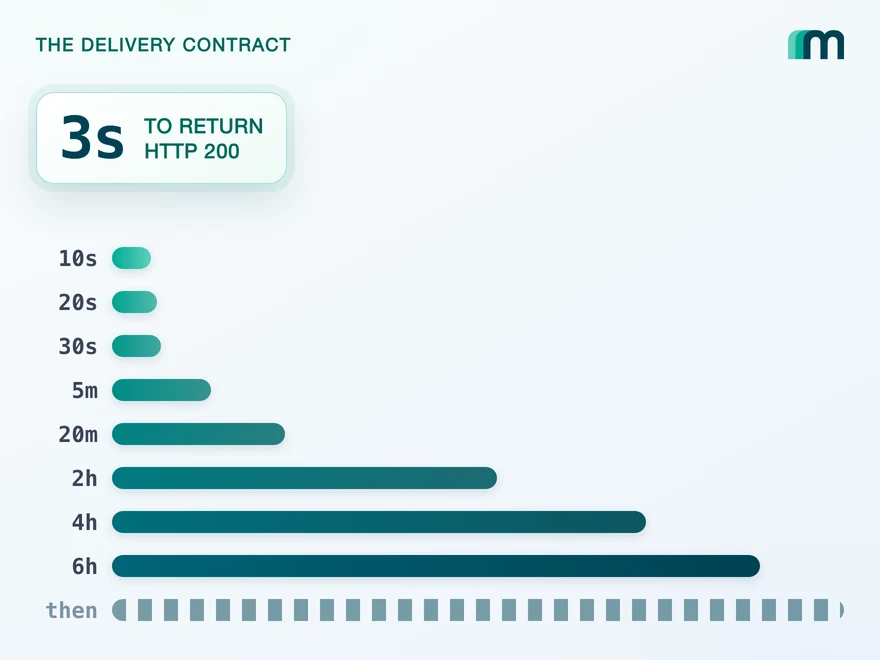
QuickBooks Online Webhooks: Events, Retries and Recovery
QuickBooks Online webhooks cover 29 entity types and expect HTTP 200 in three seconds. Why Intuit still asks you to poll change data capture.
 Lennart Svensson · 25 Aug 2026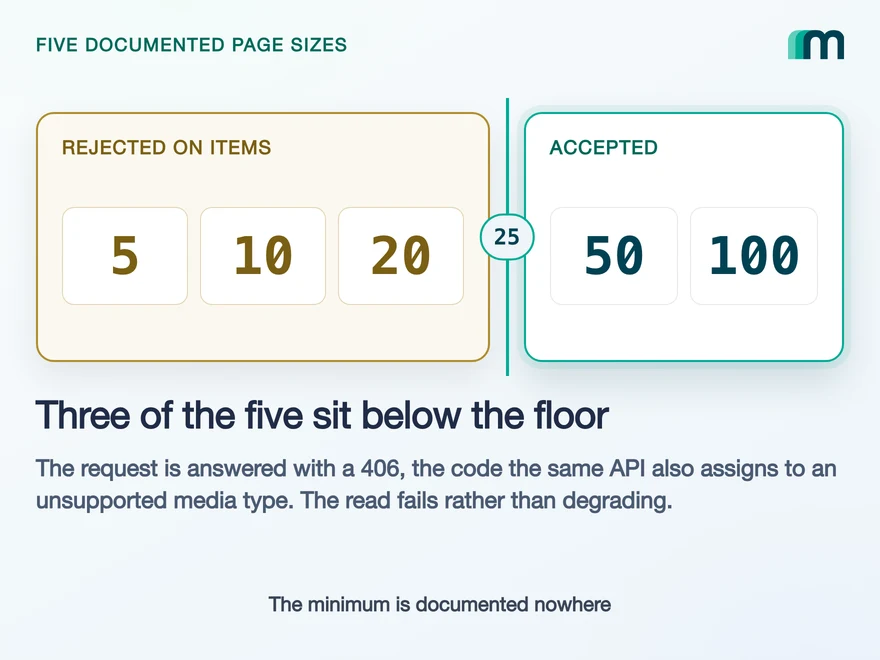
Lexware Office Pagination: The 406 and One Page Size
Lexware Office validates the page size and rejects a bad one with 406, the same code it uses for an unsupported media type. What that means for your read loop.
Lennart Svensson · 20 Aug 2026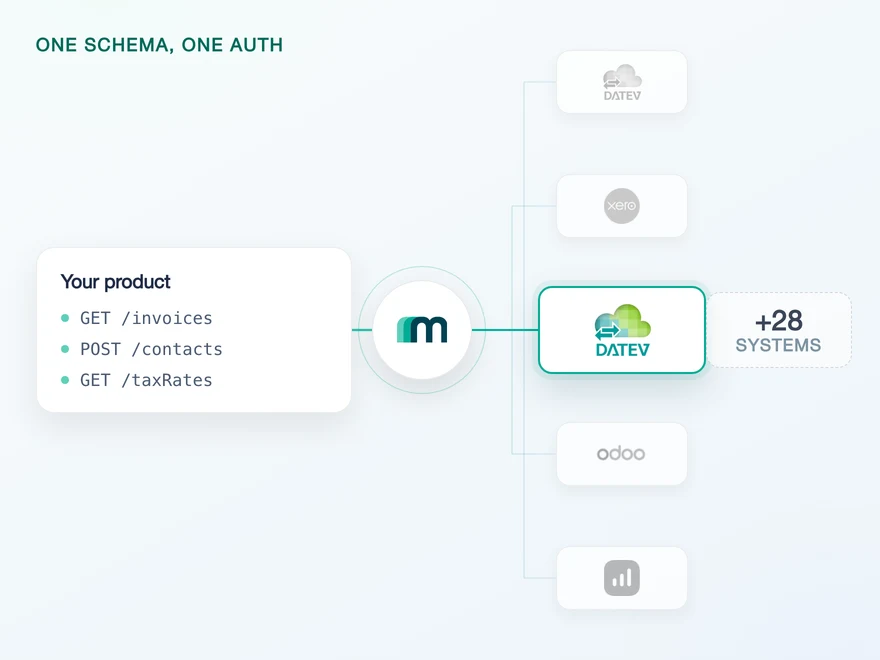
How to Integrate with DATEV Rechnungswesen: One Connection
One connection carries reading and writing in DATEV Rechnungswesen, on a two-year token. Which objects travel in which direction is the real decision.
Lennart Svensson · 17 Aug 2026Build once on the Unified API.
Every accounting platform is rewriting its partner programme at the same time. Build against one interface and the next programme change is a line in a table rather than a project.